
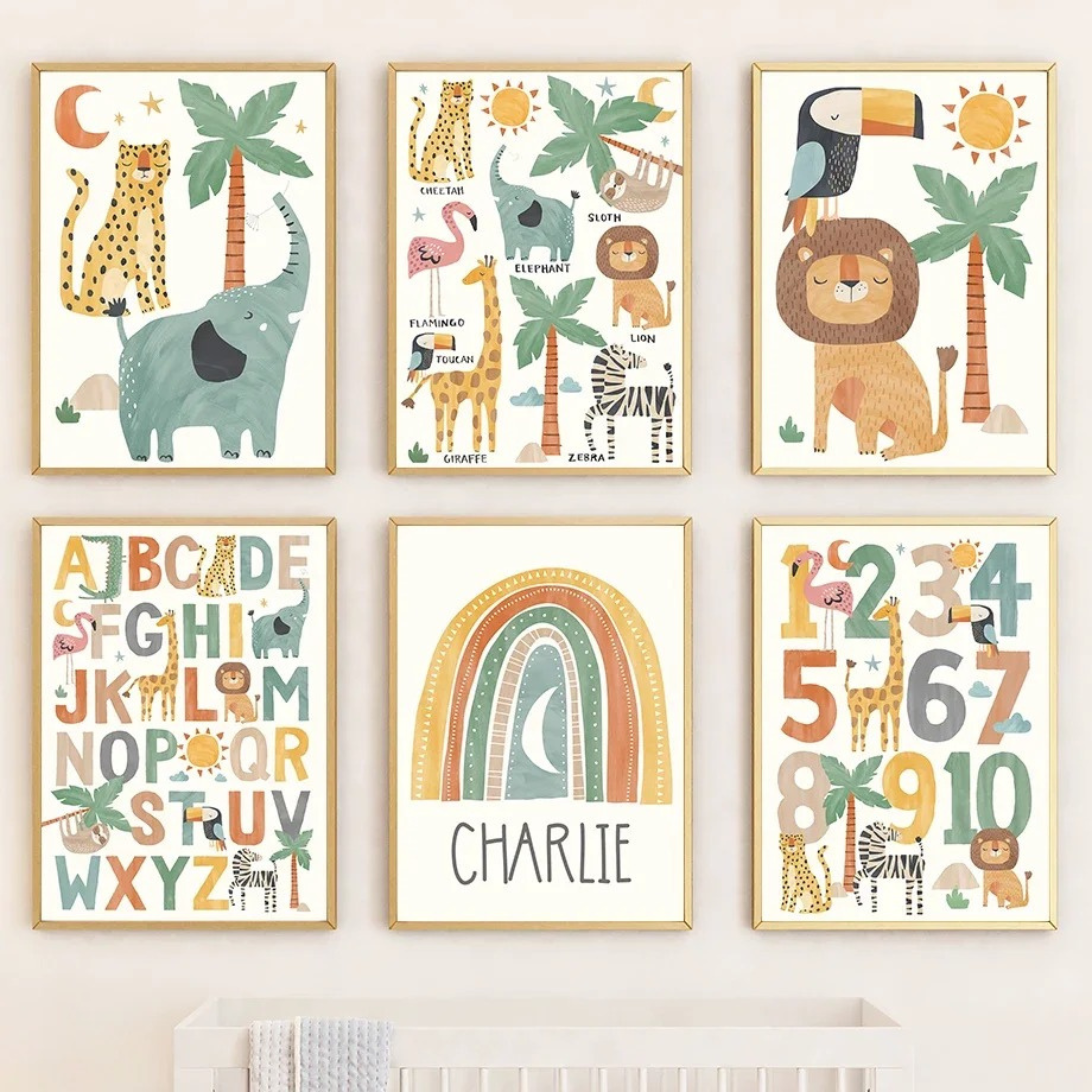
Children have a natural curiosity about nature and animals . Observing plants, oceans, forests, or different animal species stimulates their imagination and learning .
But how can we encourage this interest while adding a decorative and educational touch to their room? Posters about nature and animals are an excellent way to spark their curiosity while making their space warm and inspiring.
In this article, discover the benefits of nature and animal posters and how to incorporate them into your child's bedroom decor.
1. Why are children fascinated by nature and animals?
1.1 A natural instinct for exploration
🧠 From a very young age, children are attracted to the bright colours, varied shapes and sounds of nature .
🌿 Observing nature develops their observational skills, patience, and scientific curiosity .
1.2 An essential connection with the world around them
🌍 Learning to recognize animals and ecosystems allows the child to understand the world in which they live .
💡 Interesting fact : A Stanford University study shows that children regularly exposed to nature develop greater environmental sensitivity and increased respect for living things .
1.3 A positive impact on well-being and concentration
🌳 Looking at natural elements (even in the form of images) would soothe the mind and reduce stress .
💡 Example : A room with posters of landscapes or animals creates a zen and stimulating environment, ideal for concentration and alertness.
2. The benefits of nature and animal posters for learning
2.1 Daily educational immersion
📌 An educational poster about marine animals, rainforests or dinosaurs helps the child to easily memorize the names and characteristics of the species .
💡 Example : A poster of savannah animals helps to learn to identify lions, giraffes, elephants and their natural habitat.
2.2 A visual aid to enrich vocabulary
📖 Associating an image with a word makes learning vocabulary easier.
🎨 A bilingual poster even allows you to learn the names of animals in several languages !
2.3 Develop a love of nature and an ecological mindset
♻ Discovering endangered species and fragile ecosystems helps children become aware of environmental issues from a very young age.
💡 Example : A poster about endangered animals raises children's awareness of species preservation.
3. How to choose a good poster about nature and animals for your child?
3.1 Select themes appropriate for the child's age
👶 For the youngest children (1-3 years old) : Posters with simple and colorful illustrations .
🧒 From 4-6 years old : More detailed posters with the names of the animals and their characteristics .
👦 From age 7 : Educational posters with scientific information about habitats and species.
💡 Tip : Choose evolving posters that will accompany the child over the years.
3.2 Opt for an attractive and educational design
📌 Realistic or stylized illustrations depending on the child's tastes.
🎨 Soothing and natural colors for a soft and pleasant atmosphere.
3.3 Favor personalized posters for greater engagement
🔠 A poster with the child's name makes learning more motivating and interactive.
💡 On Nookido.com , we offer personalized educational posters about nature and animals , perfect for combining decoration and learning!
4. Where should the posters be placed for optimal learning?
📌 Above the bed : For a natural and soothing immersion before bedtime.
📌 In the play area : Combine play and learning in an intuitive way.
📌 In a reading corner : Complement educational books with attractive visual aids.
💡 Tip : Alternate the posters every 3 to 6 months to maintain interest and spark curiosity.
5. How can posters be used interactively?
5.1 Turning learning into play
🎲 Activity ideas:
✔ The "Guess the Animal" game : The child must name the animal by pointing to it on the poster.
✔ Match animal sounds to images.
✔ Create stories around the landscapes and creatures depicted .
💡 Example : "Look at this poster of sea animals, can you tell me which one is the biggest?"
6. Supplement learning with other activities
📚 Read books about nature and animals to deepen your knowledge.
🎶 Listen to nursery rhymes or animal sounds to stimulate auditory memory.
🌿 Go out into nature to observe in real life what is seen on the poster.
💡 Tip : Organize educational outings to zoos, aquariums or forests to reinforce knowledge learned at home.
FAQ – Frequently Asked Questions from Parents
At what age does a child begin to take an interest in animals and nature?
From 6 months old , babies are fascinated by the shapes and colors of animals . From 2 years old , they begin to recognize and name them .
Are posters really effective for learning?
Yes! They offer daily exposure and allow for a natural assimilation of information .
Should the posters be accompanied by other materials?
Ideally, yes! Posters are an excellent complement to books, games and educational outings.
Key takeaways
Posters about nature and animals are an effective and fun way to awaken children's curiosity , enrich their vocabulary and raise their awareness of the environment .
🌿 Give your child an immersion in nature with our personalized posters on Nookido.com !





Share and get 15% off!
Simply share this product on one of the following social networks and you will unlock 15% off!